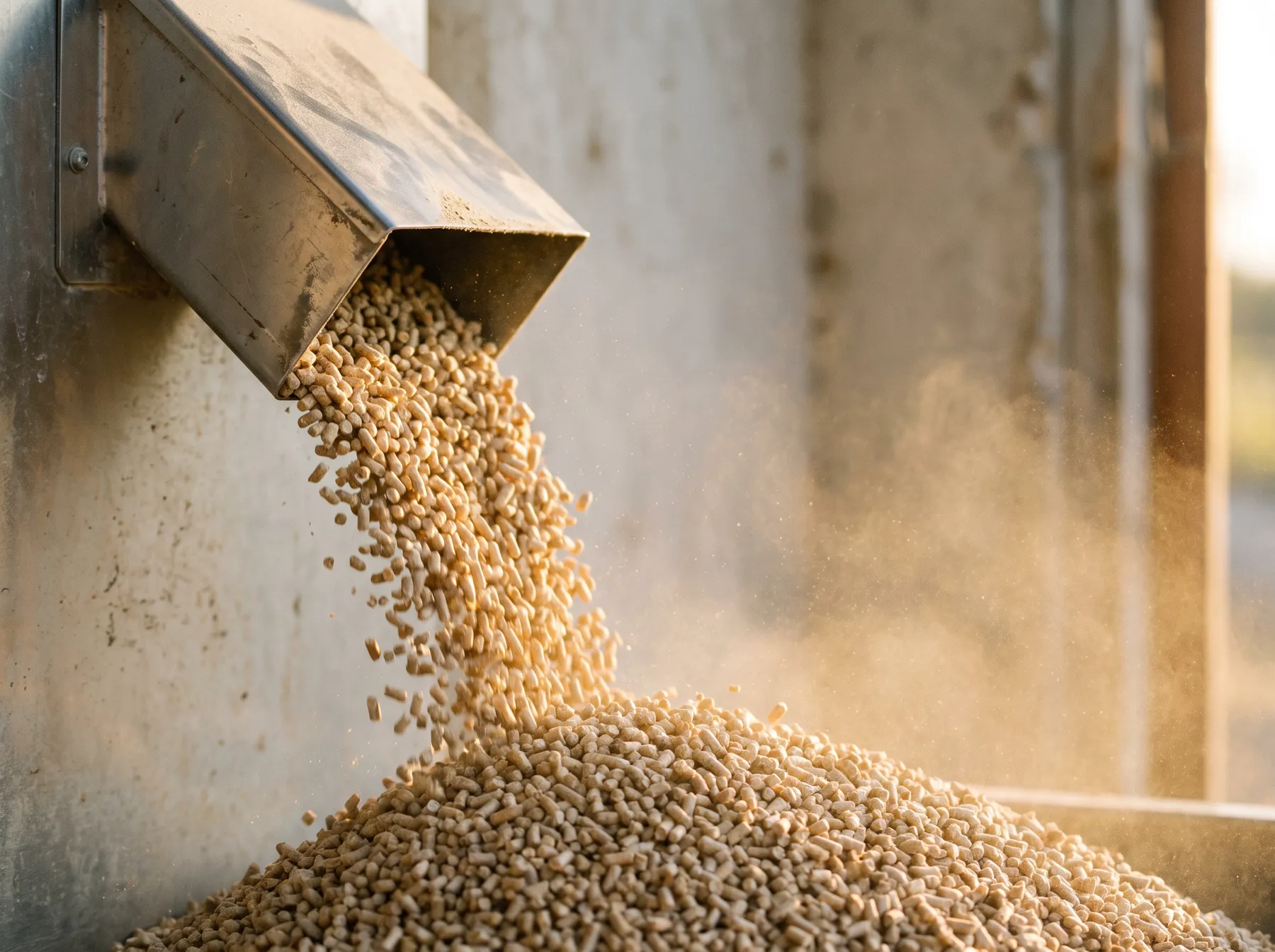

Maximise throughput.Ensure quality.Protect your plant.
Pelleting and extrusion control
Automill's Pelleting and Extrusion module delivers intelligent control, real-time monitoring and advanced reporting to maximise performance, quality and safety.
Quality logged, not guessed
The operator enters pellet durability every 15 to 30 minutes, and amps, temperatures and steam conditions are logged with it. Structured monitoring means faster corrective action and no unnecessary re-pelleting.
Protection faster than a person
Choke detection uses several sensor inputs to open bypass valves and stop the feed far faster than any human could, then restarts the feed automatically once conditions are favorable. Empty-running is detected too, to protect the pelleter die.
One person, up to three machines
The system can be run by a single person in a control room, even with 2 or 3 pellet machines. Someone is needed at the pelleter only to take quality samples for durability tests.
Intelligent control, complete visibility
Recipe selectedRecipe and version stored in the system.
Process controlAutomated control of pelleter and auxiliaries.
Quality monitoringDurability and parameters logged every 15 to 30 minutes.
Prevent and protectChoke detection, empty-run protection and safety.
Downtime and energyReal-time downtime and kWh per tonne tracking.
Report and analyseComprehensive reports for better decisions.


What it records and guards
Recipes
- Knows and stores which recipe or formulation is running
- Reports tons per hour per recipe version, showing what a formulation change does to production
Downtime
- Logged automatically in real time as soon as the feeder is no longer feeding the pelleter
- Categories such as Cooler Emptying and Choked define each reason
- Die changes logged, with total tons produced on each die compared against previous dies
- An automatic cooler emptying sequence minimises wasted time
Energy
- Power meters on the pelleter MCC log kilowatt-hours during operation
- kWh per tonne reported with recipe and quality, so the cost of producing a feed through the pellet plant is clear, including re-pelleting
Safety
- A sensor stops the conditioners immediately when their doors are opened
- The pelleter door is locked until the pelleter has come to a complete stop
- A control pendulum to jog the motor for maintenance sits outside reaching distance of the rollers
- Multiple instruments for quick response to a serious fault


What it adds up to
- Maximised throughput
Optimised batching, automatic control and faster response.
- Consistent quality
Monitor quality and process parameters to maintain product excellence.
- Plant protection
Prevent damage, reduce downtime and extend equipment life.
- Real-time insights
Visibility of performance, energy and downtime.
- Enhanced safety
Instrumentation and controls to keep people and plant safe.
- Lower costs
Better efficiency, less rework, lower energy and labour costs.